Free ASVAB Shop Information Practice Test
The ASVAB Shop Information Practice Test helps you review the tools, fasteners, measuring devices, and common shop practices tested on the SI subtest.
Many questions come down to one decision: which tool is the best choice for the job in front of you?
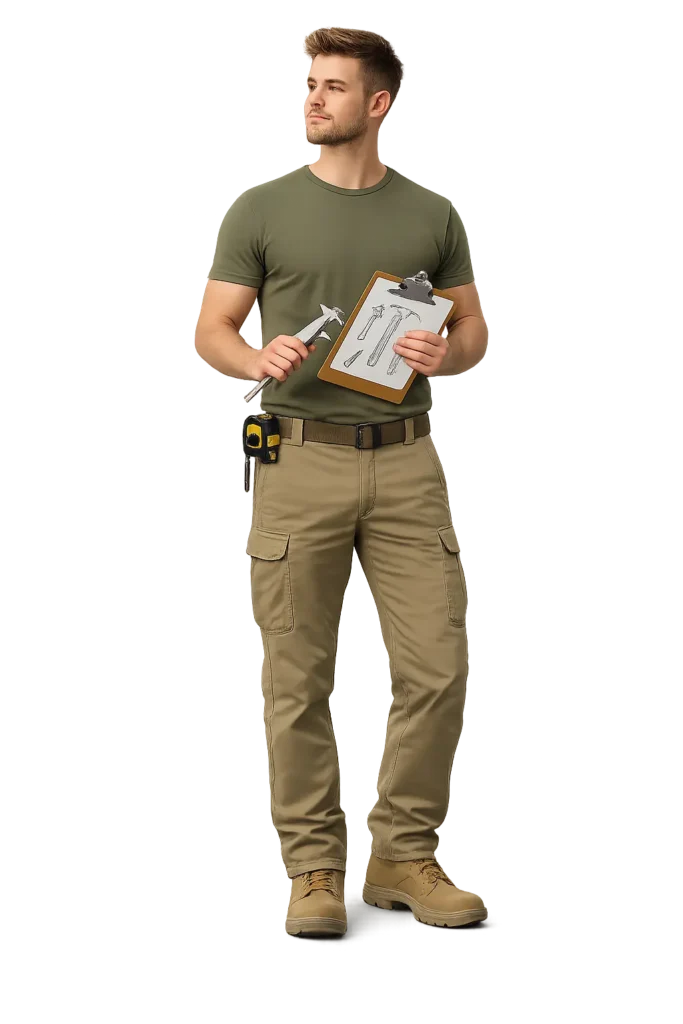
ASVAB Shop Information Practice Test
Pliers Clamps and Holding Tools
You need to form a small loop at the end of a thin wire in a tight space. Which tool is the best choice?
Needle-nose pliers have long, narrow jaws that give good control when bending small wire or working in tight spaces.
Wrenches Drivers and Fasteners
A wrench has a closed ring at each end that surrounds most or all of a nut or bolt head. What type of wrench is it?
A box-end wrench has a closed end that surrounds the fastener head, giving contact on several sides.
Drilling Punching and Hole Making
Before drilling a hole in smooth metal, which tool is used to make a small starting indentation?
A center punch makes a small dimple that helps keep the drill bit from wandering when the hole is started.
Saws Files Rasps and Chisels
Which hand saw is generally the best choice for cutting through a small steel bar?
A hacksaw uses a fine-toothed blade designed for cutting metal and similar materials.
Hammers Soldering and Joining
Which hammer is commonly used in metalworking for tasks such as shaping metal or setting rivets?
A ball-peen hammer has a rounded peen and is widely used for metalworking operations such as shaping and riveting.
Measurement Layout and Leveling
A tool has an anvil, spindle, sleeve, thimble, and ratchet. Which measuring tool is it?
These are standard parts of an outside micrometer, which is used for precise external measurements.
Woodworking Sanding and Surface Preparation
Why is sandpaper often wrapped around a sanding block when smoothing a flat surface?
A sanding block supports the abrasive sheet and spreads hand pressure more evenly, helping avoid dips, high spots, and finger-shaped ridges.
Power Tools and Shop Safety
What is the safest basic practice before changing a blade, bit, or abrasive accessory on an electric power tool?
Disconnecting power prevents accidental startup while an accessory is being changed or adjusted.
Pliers Clamps and Holding Tools
Which pliers have an adjustable pivot that provides more than one jaw opening for general gripping?
Slip-joint pliers use a movable pivot so the jaws can open to more than one gripping size.
Wrenches Drivers and Fasteners
Which wrench normally has an open end on one side and a closed box end on the other?
A combination wrench combines an open-end wrench and a box-end wrench, usually in the same fastener size.
Drilling Punching and Hole Making
Which tool is used mainly to drive out or install a straight pin after the pin has already been loosened or aligned?
A pin punch has a straight working end used for driving pins. A center punch is designed to mark the center of a future hole.
Saws Files Rasps and Chisels
Which handsaw is designed to make a rough cut in the same direction as the grain of a thick wood board?
A ripsaw is designed to cut wood with the grain. Its tooth geometry differs from a saw intended to cut across the grain.
Hammers Soldering and Joining
Which hammer is designed with a curved or straight claw for pulling nails?
A claw hammer has a striking face on one side and a split claw on the other for removing nails.
Measurement Layout and Leveling
Which tool is best for making a very precise measurement of the outside diameter of a small metal shaft?
An outside micrometer is designed for high-precision external measurements such as shaft diameter or material thickness.
Woodworking Sanding and Surface Preparation
Which hand tool removes thin shavings from a wood surface to flatten or smooth it?
A hand plane uses a cutting iron to remove thin shavings from wood and can flatten, straighten, or smooth a surface.
Power Tools and Shop Safety
Why are guards used on many power saws and grinders?
Machine and tool guards help separate the operator from moving hazards and can help deflect fragments or debris.
Pliers Clamps and Holding Tools
Which tool is designed to clamp tightly onto a part and remain locked until a release lever is used?
Locking pliers clamp onto a workpiece and stay locked in position until their release mechanism is operated.
Wrenches Drivers and Fasteners
A screw head has a six-lobed star-shaped recess. Which driver should be used?
Torx fasteners use a six-lobed star-shaped recess and require a matching Torx driver.
Drilling Punching and Hole Making
Which cutting attachment uses a circular ring of teeth to make a relatively large round opening?
A hole saw cuts around the edge of a circle, removing a plug of material and producing a larger opening than an ordinary drill bit.
Saws Files Rasps and Chisels
Which handsaw is intended primarily for cutting across the grain of wood?
A crosscut saw is designed to sever wood fibers when cutting across the grain.
Hammers Soldering and Joining
Which striking tool is preferred when you need to move or seat a part while reducing the chance of marring its surface?
A rubber mallet delivers a softer blow than a steel hammer and is useful when surface damage should be minimized.
Measurement Layout and Leveling
Which measuring tool can commonly measure outside dimensions, inside dimensions, and depth?
Many calipers, especially vernier or digital types, can measure outside dimensions, inside dimensions, and depth.
Woodworking Sanding and Surface Preparation
Which tool is commonly struck with a mallet to cut a recess or shape an edge in wood?
A wood chisel has a sharpened cutting edge used for removing and shaping wood, often with controlled mallet blows.
Power Tools and Shop Safety
When using a grinder that may throw chips or abrasive particles, which protection is especially important?
Grinding can create flying particles, so proper eye protection is important to protect the operator from impact hazards.
Pliers Clamps and Holding Tools
A tool has a long steel bar with one fixed jaw and one sliding jaw. What type of clamp is it?
A bar clamp uses a long bar or rail with jaws that can be adjusted to hold workpieces over a wide range of widths.
Wrenches Drivers and Fasteners
Which screwdriver is designed for a screw with a simple cross-shaped recess?
A Phillips screw has a cross-shaped recess that matches a Phillips screwdriver tip.
Drilling Punching and Hole Making
What is the main purpose of a countersink?
A countersink cuts a tapered recess so a matching screw head can sit lower or flush with the surface.
Saws Files Rasps and Chisels
Which saw has a narrow blade held in a frame and is useful for curved or detailed cuts?
A coping saw uses a thin blade held under tension in a frame, making it useful for curves and detailed cuts.
Hammers Soldering and Joining
Which heated hand tool is commonly used to melt solder for an electrical connection?
A soldering gun supplies heat to melt solder so it can flow into an electrical or light metal joint.
Measurement Layout and Leveling
Which tool is used to check or mark a 90-degree angle on a workpiece?
A square provides a right-angle reference for checking or marking 90-degree relationships.
Woodworking Sanding and Surface Preparation
Compared with 220-grit sandpaper, 60-grit sandpaper is generally:
Lower grit numbers indicate larger, coarser abrasive particles. Higher numbers indicate finer abrasives.
Power Tools and Shop Safety
Why should loose clothing and dangling jewelry be kept away from rotating shop machinery?
Loose clothing, jewelry, and unsecured hair can be pulled into rotating or moving machinery.
Pliers Clamps and Holding Tools
Which tool is best for holding a small metal part firmly on a workbench while it is filed?
A bench vise is mounted to a workbench and uses jaws to hold a workpiece securely during operations such as filing or sawing.
Wrenches Drivers and Fasteners
Which nut has slots at one end so a cotter pin can pass through the nut and a drilled bolt or stud?
A castellated nut has slots that align with a hole in the bolt or stud so a cotter pin can help prevent the nut from turning loose.
Drilling Punching and Hole Making
Which common bit is designed to drill a basic round hole and has spiral flutes that carry chips away?
A twist drill bit has helical flutes that form the cutting edges and help move chips out of the hole.
Saws Files Rasps and Chisels
Which hand tool has very coarse raised teeth and removes material quickly when shaping wood or other relatively soft material?
A rasp has coarse individual teeth that remove material aggressively. A file usually has finer, more regular cutting teeth.
Hammers Soldering and Joining
What is the main purpose of flux during soldering?
Flux helps remove or prevent surface oxides so molten solder can wet and flow across the joint more effectively.
Measurement Layout and Leveling
Which tool uses a bubble in a vial to check whether a surface is horizontal or vertical?
A spirit level uses a bubble vial to indicate level or plumb alignment.
Woodworking Sanding and Surface Preparation
Two boards are being glued edge-to-edge. Which tool is most useful for holding them firmly together while the adhesive cures?
A bar clamp can span across multiple boards and apply steady pressure while glued parts are held in alignment.
Power Tools and Shop Safety
A small workpiece must be drilled on a drill press. Which practice gives the best control?
A clamp or fixture keeps the workpiece from spinning or being pulled by the drill bit.
Pliers Clamps and Holding Tools
Which pliers are especially useful for gripping a large round fitting because their jaws can open through several groove positions?
Tongue-and-groove pliers have multiple adjustment positions and a wide jaw opening for gripping larger objects and fittings.
Wrenches Drivers and Fasteners
What is the main advantage of a ratchet handle used with sockets?
A ratchet allows the handle to move back and forth while the socket drives the fastener in one selected direction.
Drilling Punching and Hole Making
When using a portable drill on a small workpiece, what is the best way to keep the work from spinning if the bit catches?
Securing the workpiece keeps it from rotating or shifting if the drill bit grabs.
Saws Files Rasps and Chisels
Which tool is struck with a hammer to cut or chip cold metal?
A cold chisel is designed for cutting or chipping metal without heating the workpiece.
Hammers Soldering and Joining
Which fastener is installed by pulling a mandrel so the body expands and clamps thin materials together from one accessible side?
A blind rivet, often called a pop rivet, can join thin materials when only one side of the assembly is accessible.
Measurement Layout and Leveling
Which simple tool uses a weight suspended from a string to establish a true vertical reference?
A plumb bob hangs under gravity and establishes a vertical reference line.
Woodworking Sanding and Surface Preparation
If a board edge must be made smoother after rough sawing, which action is most appropriate?
Surface-preparation tools remove high spots and roughness. The exact tool depends on how much material must be removed and the finish required.
Power Tools and Shop Safety
Before using a portable grinder, what should be checked about the abrasive wheel?
Abrasive wheels should be inspected for damage, matched to the tool and speed requirements, and used with required guarding.
TOOL KNOWLEDGE
What Shop Information Actually Tests
Shop Information measures knowledge of tools, shop terminology, and common shop practices.
The fastest way to prepare is to connect each tool with the job it is designed to perform.
Grip and Hold
Pliers, clamps, vises, and other holding tools.
Cut and Shape
Saws, files, rasps, chisels, punches, and abrasive tools.
Measure and Mark
Rules, squares, levels, calipers, micrometers, and layout tools.
Fasten and Join
Wrenches, screwdrivers, fasteners, and soldering tools.
CURRENT TEST FORMAT
Shop Information Test Format
The computer version tests Shop Information by itself, while the paper version combines Shop and
Auto Information.
| Test Version | Questions | Time Limit | Approx. Time |
|---|---|---|---|
| CAT-ASVAB Shop Information | Questions 10 scored | Time Limit 6 minutes | Approx. Time About 36 sec |
| Paper Auto & Shop | Questions 25 combined | Time Limit 11 minutes | Approx. Time About 26 sec |
On the paper ASVAB, Auto Information and Shop Information are combined into one Auto & Shop Information subtest.
RIGHT TOOL FOR THE JOB
Choose the Tool From the Work It Needs to Do
Start with the task and work backward to the tool family.
Material
Metal, wood, wire, fastener, or finished surface?
Action
Grip, cut, drill, shape, measure, mark, or join?
Precision
Rough work and precision measurement need different tools.
Working end
Inspect the jaws, blade, point, head, scale, or recess.
PILERS
Know Why Different Pliers Have Different Jaws
FASTNER TOOLS
Separate Wrenches From Driver Types
Wrenches
- Open-end wrench
- Box-end wrench
- Combination wrench
- Adjustable wrench
Driver Patterns
- Slotted
- Phillips
- Hex
- Torx
BEFORE DRILLING
Use a Center Punch Before Drilling Metal
A center punch makes a small indentation where a hole should begin. This helps keep the drill bit from wandering.
Do not confuse a center punch with a pin punch or cold chisel.
CUTTING TOOLS
Choose the Saw From the Material and Cut
Hacksaw
Commonly used for cutting metal bars, tubing, and similar stock.
Rip Saw
Used for cutting wood in the direction of the grain.
Coping Saw
Useful for curved or detailed cuts in thin material.
DRILLING AND OPENINGS
Not Every Hole-Cutting Tool Makes the
Same Opening
STRIKING AND SHAPING
Use the Head and Surface to Identify the Tool
Ball-peen hammer
The rounded peen is associated with metalworking jobs such as shaping or striking suitable metalworking tools.
File vs rasp
A file shapes and smooths with rows of teeth. A rasp has coarser teeth and removes material more aggressively.
MEASUREMENT
Match the Measuring Tool With the
Precision Needed
Rule
Basic Short Measurements
Tape Measure
Longer Distances
Caliper
Inside, outside, or depth measurements
Outside Micrometer
Precise outside thickness or diameter
LAYOUT AND ALIGHNMENT
Mark and Check the Work Before Cutting
Square and level
A square helps mark or check right angles. A level helps check horizontal or vertical alignment.
Plumb Reference
A plumb line establishes a true vertical reference.
FASTNERS
Look at How the Fastener Is Designed to Stay in Place
Castellated Nut
Slots allow a cotter pin to help stop the nut from turning loose when used with a drilled bolt or stud.
Wing Nut
Large wings make it easy to tighten or loosen by hand.
Washer
Can spread load, protect a surface, or support a locking function depending on design.
HOLDING AND JOINING
Hold the Work Before You Cut, Drill, or
Join It
Clamps
Clamps hold a workpiece or keep parts together during drilling, cutting, gluing, or assembly.
Soldering Tool
A soldering iron or gun supplies heat to melt solder. Flux supports the process but is not the heated tool.
WOODWORKING
Know Why a Sanding Block Improves
Surface Work
A sanding block supports the abrasive paper so pressure is spread more evenly instead of being
concentrated under the fingers.
Cutting
Choose the saw or blade from the grain direction, thickness, and shape of cut.
Surface Preparation
Sanding, filing, scraping, and planing remove or smooth material in different ways.
POWER TOOLS
Identify a Power Tool From Its Working Part
A sanding block supports the abrasive paper so pressure is spread more evenly instead of being
concentrated under the fingers.
Drill
A rotating bit makes holes or drives suitable fasteners.
Grinder
An abrasive wheel removes material or shapes edges.
Sander
Abrasive motion smooths a surface.
Power saw
A powered blade cuts material, with blade type matched to the job.
SHOP SAFETY
Match the Hazard With the Protection
Flying Particles
Grinding, drilling, and cutting can throw chips or fragments, so suitable eye protection matters.
Moving Parts
Guards should stay in place when a powered tool is designed to use them.
Hot Work
Soldering and other heated tools can burn skin or nearby material if handled carelessly.
PICTURE QUESTIONS
Be Ready to Identify Tools From Pictures
On pliers, inspect the jaws. On a wrench, inspect the ends. On a screwdriver question, inspect the fastener recess. On a saw, inspect the blade. On a measuring tool, inspect the scale and moving parts.
Small visual details often separate tools that belong to the same family.
MILITARY JOB SCORES
Shop Information Does Not Directly Set Your AFQT
On pliers, inspect the jaws. On a wrench, inspect the ends. On a screwdriver question, inspect the fastener recess. On a saw, inspect the blade. On a measuring tool, inspect the scale and moving parts.
Small visual details often separate tools that belong to the same family.
TEST PAGE
Six Minutes Means Tool Recognition
Must Be Fast
The standard CAT Shop Information section gives about 36 seconds per scored question.
Name the family
Pliers, wrench, saw, measuring tool, fastener, or another group.
Find one feature
Jaw shape, head style, blade, scale, or locking feature.
Match the job
Choose the tool that performs the task with the needed control.
Move on
Quick recognition should save time for harder picture or measurement items.
REVIEW MISTAKE
Review Missed Questions by Tool Family
FAQs